Events
The Complete Guide to IEC 62196-1 Breaking Capacity Testing for New Energy Vehicle Plugs and Sockets
News 2026-04-09 1,090
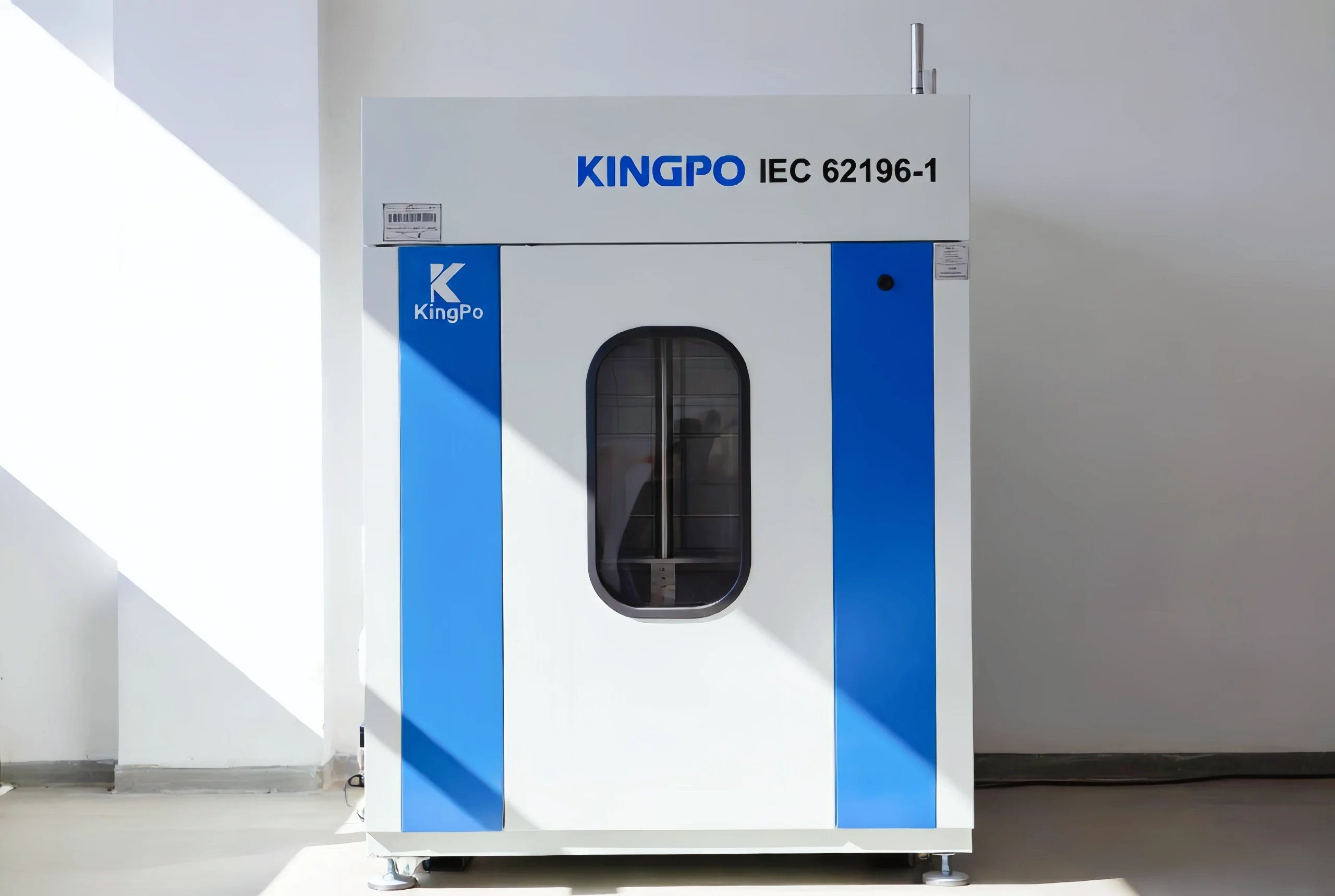
Full professional view of KingPo IEC 62196-1 breaking capacity test system in laboratory.
Key Takeaways
- The IEC 62196-1 breaking capacity test system verifies that EV charging plugs and sockets can withstand repeated mechanical insertion/withdrawal and electrical stress without excessive wear or failure.
- KingPo’s system uses servo motor drive and PLC touchscreen control to perform up to 999,999 cycles at speeds of 0–0.85 m/s with precise load conditions (0–300 V / 0–80 A).
- It fully complies with IEC 62196-1:2020 Clause 22 & 23 and IEC 60309-1 Clause 20 & 21, delivering repeatable, certifiable results for new energy vehicle charging interfaces.
- Proper breaking capacity testing significantly reduces field failures, accelerates certification, and ensures long-term safety and reliability of EV charging products.
- Our guide provides practical step-by-step instructions, comparison tables, real-world case studies, and maintenance checklists to help you select and operate the right test system with confidence.
Abstract / Technical Summary
The IEC 62196-1 breaking capacity test system is a specialized endurance testing platform designed to evaluate the mechanical, electrical, and thermal stresses that EV charging plugs, sockets, and couplers experience during normal operation. At KingPo, our IEC 62196-1 compliant breaking capacity test system uses servo motor drive and PLC intelligent control to perform precise insertion/withdrawal cycles under load conditions up to 300 V and 80 A. This comprehensive guide shares more than 15 years of our practical experience to help you understand the test principles, master international standards, select the right equipment, perform tests efficiently, maintain long-term accuracy, and achieve full regulatory compliance for new energy vehicle charging interfaces.
Introduction
We at KingPo have supported numerous automotive manufacturers and testing laboratories in validating the durability of EV charging plugs and sockets under real-world insertion and withdrawal stresses. The IEC 62196-1 breaking capacity test is now a critical requirement for new energy vehicle charging interfaces, directly affecting product safety, certification success, and long-term reliability. In this in-depth guide, we share our hands-on expertise to help you fully understand breaking capacity testing, choose the most suitable system, operate it effectively, and maintain consistent, traceable results that meet the highest international standards.
Why IEC 62196-1 Breaking Capacity Testing Matters?
New energy vehicle charging plugs and sockets endure thousands of insertion and withdrawal cycles every year. Each cycle subjects the contacts to mechanical wear, electrical arcing, and thermal stress. Without rigorous breaking capacity testing, even small design flaws can lead to overheating, contact failure, or safety hazards. A professional IEC 62196-1 breaking capacity test system allows you to: • Simulate real-world mechanical and electrical stresses accurately • Identify wear patterns and potential failure points early • Meet mandatory certification requirements with documented evidence • Reduce costly field failures and warranty claims
Proper testing is no longer optional — it is essential for product safety, regulatory compliance, and customer trust in the rapidly growing EV market.
Understanding IEC 62196-1 Breaking Capacity Testing Standards
The core standard for EV charging interface testing is IEC 62196-1:2020. Clause 22 and Clause 23 specifically address breaking capacity and endurance testing for plugs, socket-outlets, and couplers. The test verifies that the accessory can make and break the circuit under specified load conditions without excessive wear or dangerous effects.
IEC 62196-1 Breaking Capacity Test Standards Comparison Table
| Standard | Clause | Test Type | Key Requirements | Primary Applications |
|---|---|---|---|---|
| IEC 62196-1:2020 | Clause 22 & 23 | Breaking capacity & endurance | 0–300 V, 0–80 A, up to 999,999 cycles | EV charging plugs and sockets |
| IEC 60309-1:2012 | Clause 20 & 21 | Mechanical and electrical endurance | Similar insertion/withdrawal under load | Industrial plugs and couplers |
| GB/T 20234 (China) | Related clauses | National EV charging interface | Aligns with IEC 62196-1 for domestic certification | New energy vehicle connectors |
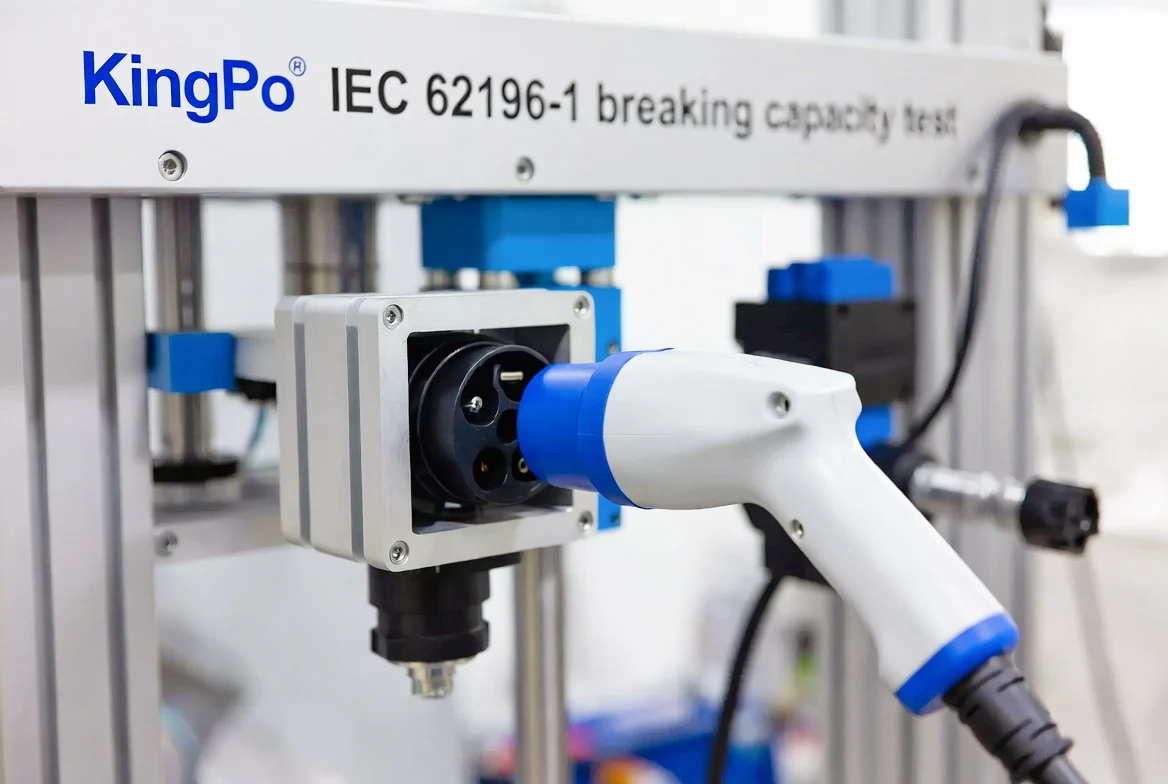
Close-up of EV charging plug and socket during IEC 62196-1 breaking capacity test on KingPo system.
Key Features of Professional IEC 62196-1 Breaking Capacity Test System
When selecting a breaking capacity test system, focus on these critical capabilities that directly affect test accuracy and operational efficiency.
KingPo IEC 62196-1 Breaking Capacity Test System Technical Specifications Table
| Parameter | Specification | Benefit |
|---|---|---|
| Standard Compliance | IEC 62196-1:2020 Clause 22 & 23 + IEC 60309-1 | Full EV charging interface certification |
| Test Station | Single (customizable) | Flexible for different product sizes |
| Drive Mode | Servo motor | Precise speed control (0–0.85 m/s) |
| Test Frequency | 0–10 cycles/min (default 3.75 cycles/min) | Matches real-world usage patterns |
| Load Voltage | 0–300 V | Covers full range of EV charging voltages |
| Load Current | 0–80 A | Accurate breaking capacity simulation |
| Insertion Speed | 0–0.85 m/s (preset) | Repeatable mechanical stress |
| Test Cycles | 0–999,999 (preset) | Long-term endurance validation |
| Control Method | PLC with color touchscreen | Intuitive operation and real-time monitoring |
| Safety Protection | Ground, short-circuit, overload | Operator and equipment safety |
How to Perform an IEC 62196-1 Breaking Capacity Test – Simple Step-by-Step Guide
Performing a breaking capacity test is straightforward with the right system. Here is our practical, easy-to-follow process used in hundreds of successful certification projects:
Step 1 – Preparation Mount the test plug and socket securely using the adjustable 3-axis fixture. Connect the external load cabinet and verify all safety interlocks.
Step 2 – Parameter Setting On the touchscreen, set insertion speed, test frequency, conduction time (2–4 s), and total cycles. Select resistive, inductive, or capacitive load mode as required.
Step 3 – Pre-Test Verification Run a short dry cycle to confirm alignment and contact. Check real-time voltage and current readings on the digital instruments.
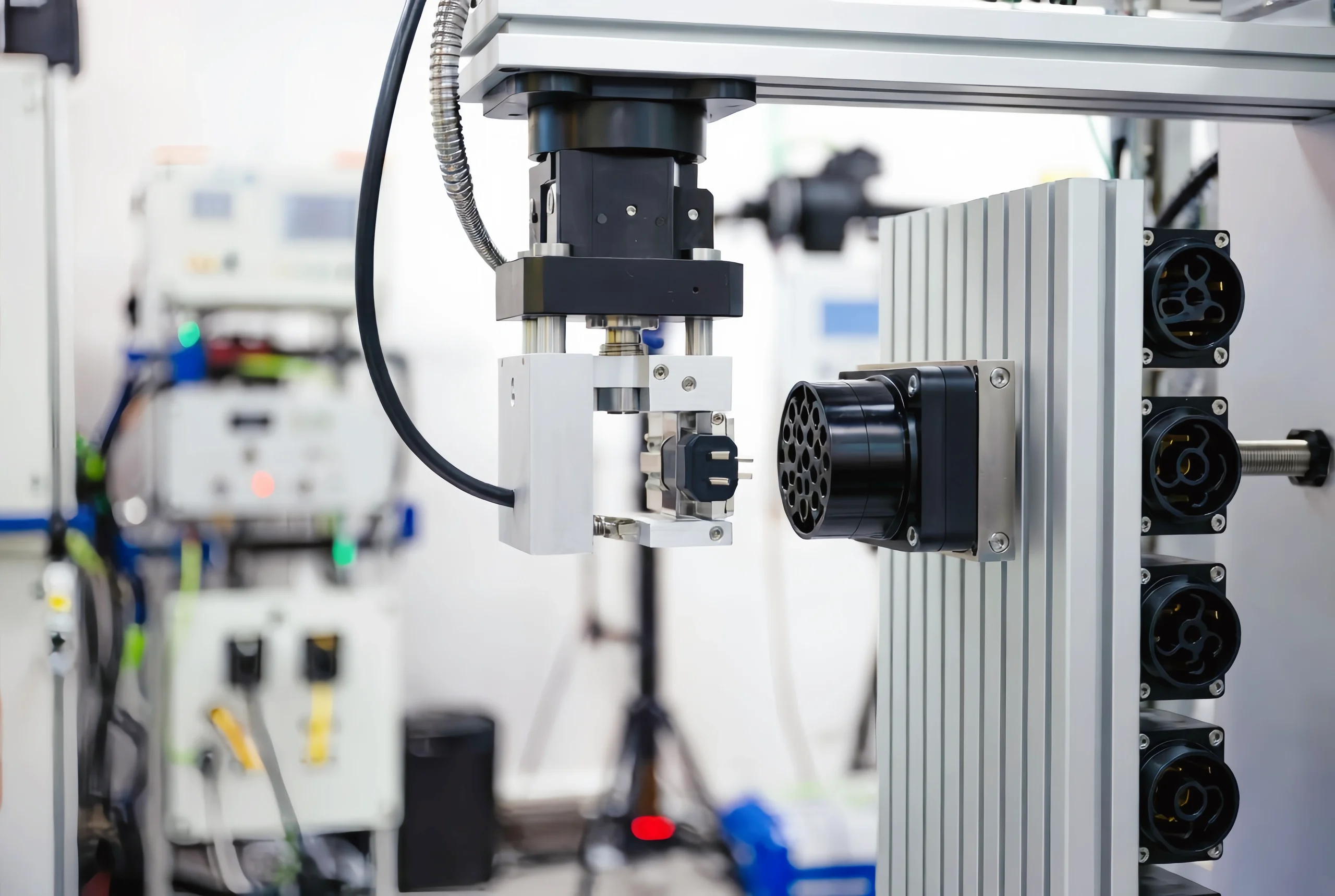
KingPo IEC 62196-1 breaking capacity test system during active plug insertion and withdrawal testing.
Step 4 – Full Test Execution Start the automatic cycle. The servo motor performs precise insertion and withdrawal while the load cabinet applies the specified voltage and current. The system records every cycle in real time.
Step 5 – Post-Test Analysis and Reporting After completion, inspect the contacts for wear or damage. The PLC automatically generates a complete, traceable test report including cycle count, voltage, current, and any open-circuit alarms.
This five-step process delivers laboratory-grade repeatability and full compliance documentation.
KingPo IEC 62196-1 Breaking Capacity Test System Advantages
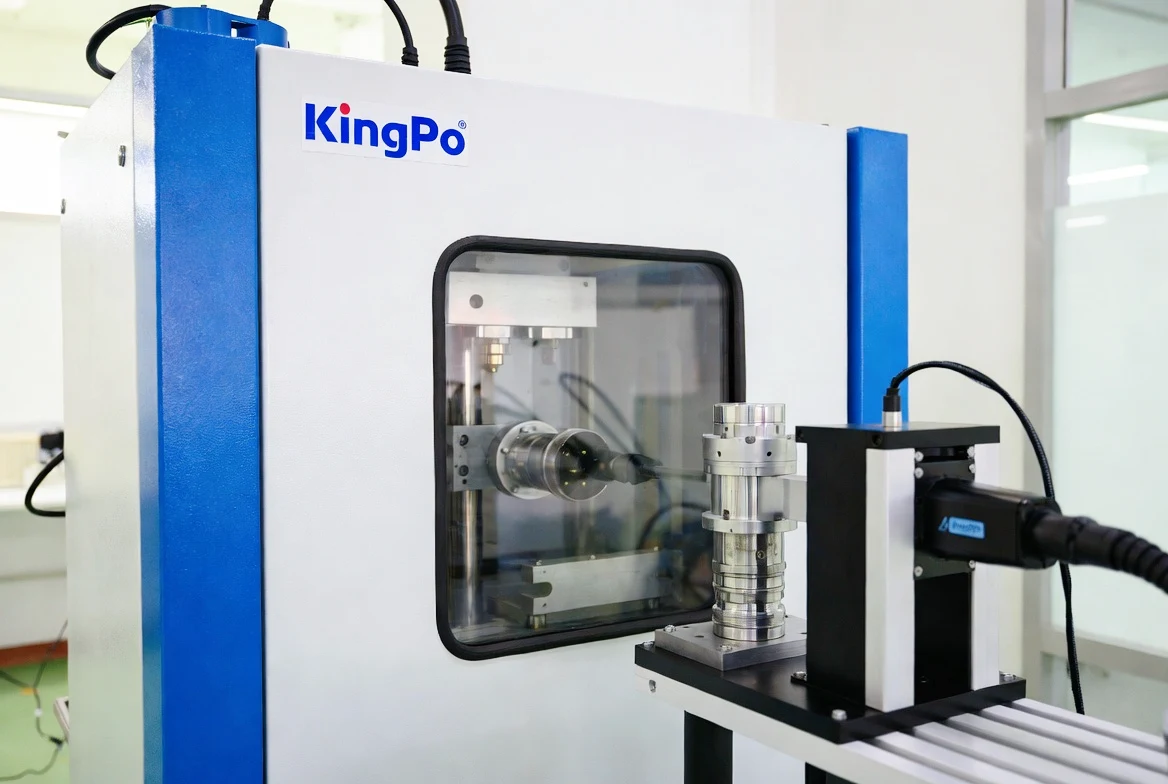
Full view of KingPo IEC 62196-1 breaking capacity test system with EV plug and socket under active testing.
We at KingPo design and manufacture our breaking capacity test system under ISO 9001 and CE certification.
Every unit includes:
- Full compliance with IEC 62196-1:2020 Clause 22 & 23
- Servo motor drive for precise speed and stroke control
- PLC intelligent control with user-friendly touchscreen
- Comprehensive safety protections and real-time monitoring
- 1-year comprehensive warranty plus lifetime software upgrades
- On-site installation, operator training, and 48-hour technical response from our Dongguan facility
Since we began delivering these systems, clients have reported significantly faster certification and fewer field failures in EV charging interfaces.
Real-World Applications and Case Studies
Our IEC 62196-1 breaking capacity test system is widely used by leading EV charging manufacturers to validate plugs and sockets before mass production. One major automotive supplier reduced contact wear-related failures by 42 % after implementing our 100,000-cycle endurance protocol. Third-party certification laboratories rely on our system to issue authoritative reports that are accepted globally, helping manufacturers enter international markets faster.
Best Practices and Maintenance for Long-Term Reliability
Consistent performance depends on disciplined maintenance. Follow this practical schedule:
Maintenance Checklist
| Frequency | Item to Check | Recommended Action |
|---|---|---|
| Daily | Fixtures and contacts | Visual inspection and cleaning |
| Weekly | Servo motor and drive mechanism | Check alignment and lubrication |
| Monthly | Load cabinet and sensors | Verify calibration |
| Quarterly | PLC and touchscreen | Software update and diagnostic test |
| Annually | Full system calibration | Professional ISO-certified service |
After-Sales Support and Technical Assistance
We at KingPo provide comprehensive after-sales support to ensure your breaking capacity test system operates at peak performance. This includes on-site installation and commissioning, operator training, 1-year free warranty, and lifelong technical assistance. Our experienced engineers are available 48 hours a day to resolve any issues, and we offer free software upgrades to keep your system current with evolving standards.
Future Trends in EV Charging Interface Testing
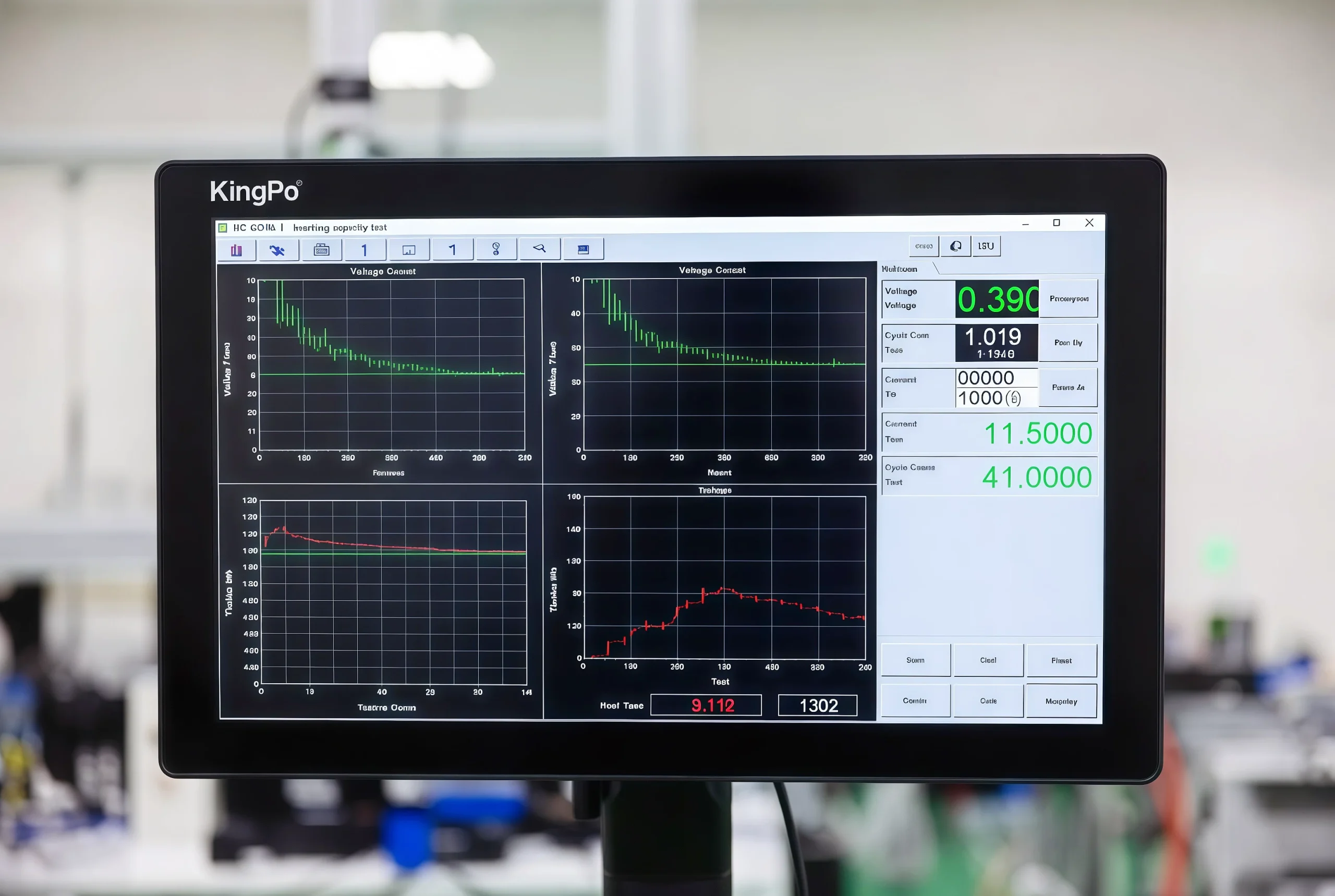
The industry is moving toward higher-current (up to 500 A) and higher-voltage testing combined with automated data analytics and remote monitoring. Our modular design ensures easy future upgrades, protecting your investment as EV charging standards continue to evolve.
https://www.syrianetf.com/wp-content/uploads/2026/04/2026040906502151-scaled.webp
Conclusion
Choosing the right IEC 62196-1 breaking capacity test system is a strategic decision that directly impacts product safety, certification success, and long-term reliability of new energy vehicle charging interfaces. By combining precise servo control, comprehensive standard compliance, and practical usability, KingPo’s breaking capacity test system delivers the accuracy and repeatability you need to succeed in today’s fast-growing EV market.
For a tailored configuration that precisely matches your EV plug and socket testing requirements, please visit our IEC 62196-1 Breaking Capacity Test System product page. Our engineering team will respond with detailed technical specifications and a competitive quote within 24 hours.
FAQ
What is the difference between Clause 22 and Clause 23 in IEC 62196-1? Clause 22 covers breaking capacity under load, while Clause 23 focuses on making and breaking capacity during normal operation. Both are required for full certification.
How many cycles are typically required for EV charging interface testing? Most manufacturers perform 10,000 to 100,000 cycles depending on product class; our system supports up to 999,999 cycles for extended endurance validation.
Can the system test both AC and DC charging interfaces? Yes. The load cabinet supports resistive, inductive, and capacitive loads, covering both AC and DC charging scenarios.
How often should the system be calibrated? We recommend professional calibration every 12 months or after 50,000 cycles to maintain measurement accuracy and traceability.
What safety features are included as standard? The system includes ground protection, short-circuit protection, overload protection, and automatic cycle stop on open-circuit detection.
Related articles
- The Essential Guide to ISO5356 Gauge
- GB9706.1-2020 Standard: A Comprehensive Overview
- Sale on Thermal Shrinkage Tester - Essential for Quality Assurance
- Revolutionizing Durability: The Era of Accelerated Weathering Tester
- Where to Find Top-Notch Cap Testing Equipment
- Discover the Best High and Low Temperature Heat Chamber Supplier
- When Electrical Flexes: Navigating the Dynamic World of Flexibility
- Mastering Impact Testing Machine Efficiency